Ease or effort?
There’s a phrase we hear often:
“I’m just going with the flow.”
It sounds wise. Peaceful, even.
But it’s not always as helpful as it seems.
Going with the flow can look like ease but feel like quiet effort.
That difference matters.
Actually, growing up in my large, busy farm family, it was often a necessity.
It was a survival skill that helped us get along and get things done.
And when things became too much, frustration would build, often without me noticing.
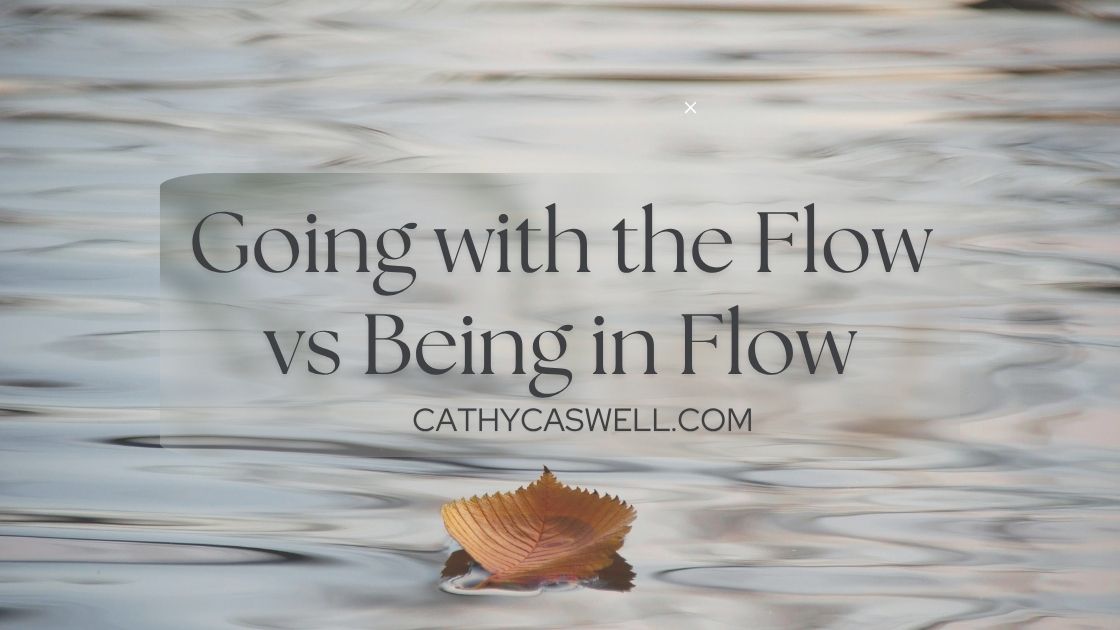
If you look closely, “going with the flow” and “being in flow” are not the same thing.
And confusing the two can quietly keep you stuck—and stressed.
Going with the flow as a way to cope
Going with the flow often means:
- Adapting
- Accepting
- Letting things happen
On the surface, that sounds healthy. You don’t get overly upset when things are out of your control, and you don’t expend energy trying to change other people or your situation.
But underneath, it can sometimes be a form of resignation.
It can look like flexibility on the outside but feel like suppression on the inside.
You go along because it feels easier than pushing back.
You adjust because it avoids conflict.
Your self-talk reinforces that it’s “just how things are.”
And over time, something subtle happens:
You stop noticing what actually matters to you.
Stressors are often still active.
For me personally, I’ve come to appreciate that when I “go with the flow,” stress reactions can still be triggered, but I’m just not paying attention to them.
Being in flow is different
Flow isn’t passive.
It’s not about giving up direction but rather removing what interferes with it.
When you’re in flow:
- Your thinking is clear
- Your actions feel aligned
- There’s movement, not just acceptance
It doesn’t mean everything is easy.
It means you’re not working against yourself.
You’re not avoiding difficult conversations. You can address them calmly.
There’s respect for others—and yourself.
So what creates the difference?
It’s not the situation.
Two people can be in the same environment:
- One feels stuck, drained, and stressed
- The other feels engaged, creative, and responsive
The difference is internal.
It’s the tension, the mental noise, the patterns running in the background.
I’ve seen many people “go with the flow” while carrying:
- Unresolved pressure
- Old expectations
- Invisible stress responses
From the outside, they look adaptable.
On the inside, they’re using a lot of effort to appear calm—maybe even easygoing.
And I have definitely been there myself.
Restoring the flow.
Flow doesn’t come from trying harder to adapt.
It comes from releasing what disrupts natural alignment.
I’ve come to appreciate how memories and beliefs can quietly shape those disruptions—creating automatic patterns of stress and reaction.
The good news is, these patterns are not fixed.
Approaches like Logosynthesis® offer a way to identify and shift what is held in those internal reactions.
When something shifts internally:
- You don’t have to force decisions
- You don’t second-guess as much
- You respond instead of react
So the question isn’t:
“Should I go with the flow?”
It’s:
“What is pulling me out of flow in the first place?”
Because when that changes, flow isn’t something you try to achieve.
It’s something that’s already there—when you’re no longer working against it.